
Guide
What are scrubs? The story of the modern medical uniform
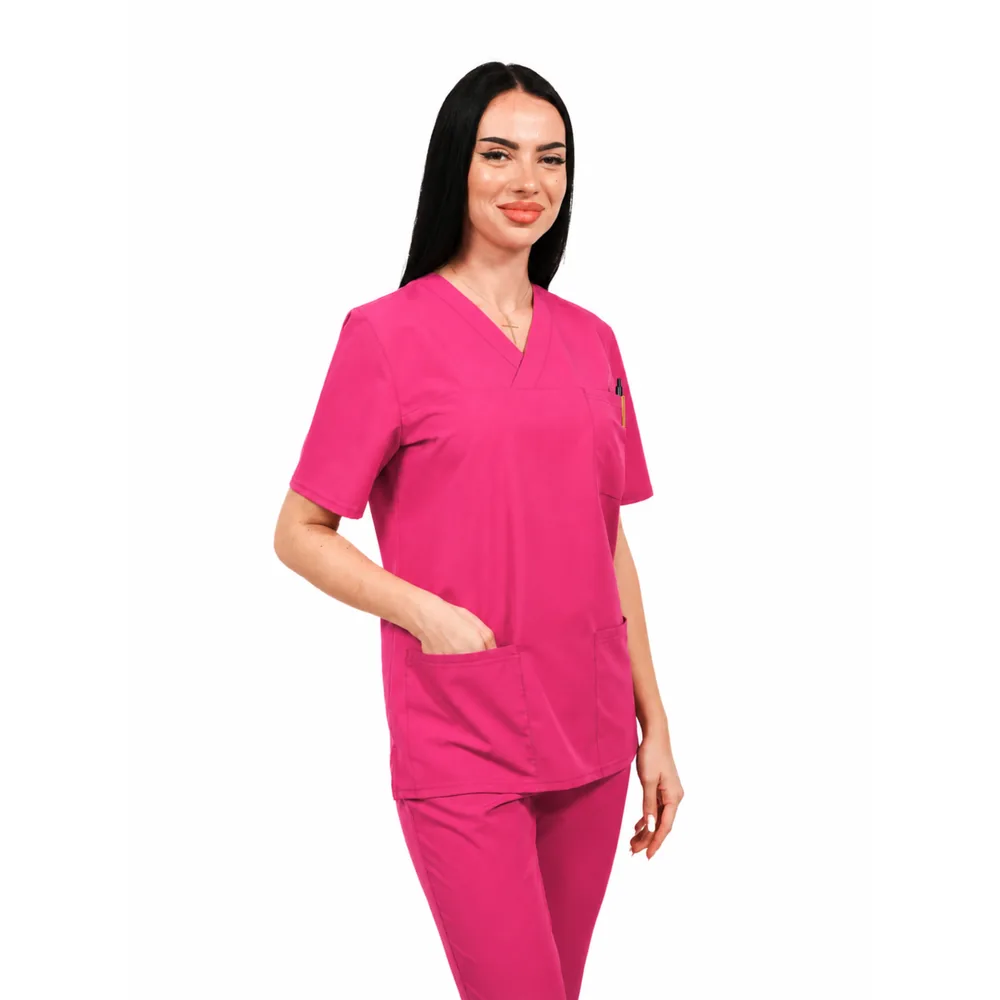
Scrubs are the two-piece medical work uniform, a top and matching trousers, and the name comes from the verb “to scrub”: to wash thoroughly, with real friction. It refers to the ritual surgeons perform before every operation, washing their hands and forearms for minutes on end, following a strict protocol, before putting on a clean outfit reserved for the operating theatre. Those clothes borrowed the name of the ritual, and from there the word spread to everyday medical workwear as a whole.
The word travelled far beyond English-speaking hospitals, mostly through medical TV series and online shops, so plenty of people use it without being sure what it actually covers. Are scrubs the same thing as a medical uniform? Are they different from a lab coat? Is it “a scrub suit” or just “scrubs”? The short answer: if you wear a medical top with matching trousers to work, you wear scrubs, whatever you happen to call them.
This guide tells the story of the word and of the garment: where the term comes from, how the uniform evolved from universal white to today’s colours, how scrubs differ from a lab coat, and what the modern version looks like, the one we sew in our own factory. And if you landed here looking for a set, our full collection of medical scrubs is waiting in the shop.
Where the word “scrubs” comes from
The word comes from “scrubbing in”, the name of the surgical hand-washing ritual performed before entering the operating theatre. “To scrub” means to rub vigorously, with a brush and soap, not merely to rinse. A surgeon who has been through the ritual is said to have “scrubbed in”: only then do they put on sterile equipment and approach the operating table.
By extension, the clothes worn after scrubbing in came to be called “scrubs”: the outfit you only ever wear clean, simple, easy to change and to sanitise, with no buttons, buckles or trim for anything to collect in. The name stuck even after the garment left the operating theatre and became the everyday uniform of medical staff. In today’s English there is nothing technical left in it: “scrubs” is simply the ordinary word for hospital workwear.
That history carries a nuance worth remembering: originally, “scrubs” did not describe a particular cut, but a role. The suit is meant to be clean, comfortable and replaceable, a piece of equipment rather than a piece of wardrobe. The cut, the fabric and the colours have changed enormously over time; the idea has not.
A short history of the medical uniform
The medical uniform has passed, broadly, through three eras: universal white, surgical green, and the coloured scrubs of today. For a long time, medical clothing was white, because white was the colour of cleanliness: it showed every stain instantly, it could be boiled in the wash, and it signalled hygiene and authority to the patient. The classic nurse’s uniform, with its dress, apron and cap, belongs to the same era, an outfit built more for representation than for work. The image of the doctor in a white coat was born then and remains the symbol of the profession to this day.
In operating theatres, however, white turned out to be tiring. The strong light bouncing off white fabric, and the harsh contrast with the surgical field, strained the eyes, so over the course of the last century surgical teams gradually switched to green and blue-green, shades that are easier on the eye. Surgical green became the standard of the operating theatre, and with it came the simple two-piece format, a short-sleeved top and trousers, easy to put on, change and sterilise.
The third step came when this comfortable suit walked out of the operating theatre. Ward nurses and doctors adopted it for daily work, because it was more practical than a dress and apron or a coat over street clothes, and dentists, veterinarians and private clinics quickly followed. With that spread came the colours: every hospital, department or team can now choose its own shade. Modern scrubs are the natural continuation of this history: the same idea of a clean, practical outfit, cut from fabrics that did not exist in the era of the white coat.
Scrubs, lab coat or medical uniform: the terms explained
In practice, “scrubs”, “medical scrubs”, “scrub suit” and “medical uniform” all name the same product: the top-and-trousers set worn to work by medical staff. Only the search term differs. “Medical uniform” is the generic phrase, “scrub suit” stresses that it is a two-piece set, “scrubs” is the everyday word, and in some countries the set is affectionately nicknamed “medical pyjamas”, after its relaxed, comfortable cut. All roads lead to the same garment.
The lab coat is the only term in the family that describes something else: a garment worn over clothes or over scrubs, opening at the front, classically worn by doctors on top of street clothes or on top of their uniform. The white coat remains a badge of the profession, but it is not an alternative to the work suit; it is an extra layer. There is also the tunic, a slightly longer medical top with a straight line, worn with matching trousers; it is a variation in cut, not a separate category.
Concretely, when you order scrubs from us, you buy separate pieces: a medical top and a pair of medical trousers, combined however you like. Selling by the piece has a practical reason: the top and the trousers can be chosen in different sizes if your measurements call for it, and a worn or stained piece can be replaced without changing the whole set.
What modern scrubs are made of
Modern scrubs are cut from stretchy technical fabrics, not from the rigid cotton of the uniforms of old. Our main fabric, PI, is 92% polyester and 8% elastane, with 4-way stretch: the weave extends with the body at every bend and every reach of the arm, then recovers its shape without deforming. Over a long shift, the difference from a fixed weave is obvious from day one.
Beyond stretch, the fabric is antimicrobial-treated, breathable and temperature-regulating, dries in about 30 minutes and needs no ironing. Repeated washing does not wear it down: it withstands over 100 industrial washes, and the triple seams at the stress points keep pace with it. These are exactly the properties the classic uniforms lacked, and the reason the scrubs format has replaced the old cotton outfits almost everywhere.

We cover the composition, the treatments and how the weave behaves in daily wear at length in our guide to medical scrubs fabric; if you are choosing your first set now, it is worth the few minutes of reading.
Who wears scrubs today
Scrubs left the operating theatre behind long ago: today they are worn by doctors of every specialty, nurses and auxiliary staff, dentists and their assistants, veterinarians, laboratory and pharmacy staff. Add to them professions outside classic medicine, where hygiene and a well-groomed appearance matter just as much: beauticians and cosmeticians, salon staff, wellness and spa teams. Wherever people work clean, on the move and as a team, the two-piece suit has taken over on its own merits.
Each field has its own needs, though. A dentist works for hours with arms raised to chest level, so the shoulder and underarm of the top must not pull. A veterinarian needs roomy pockets and a fabric that washes often and without fuss. A beautician wants a cut that looks immaculate in front of a client even after an eight-hour day. We cover these differences, with concrete recommendations per field, in our guide to uniforms by specialty.
It is also worth saying that scrubs long ago stopped meaning one unisex cut for everyone. Modern collections have separate patterns for women and men, with different lines at the shoulders, bust and hip, because a suit worn for 8-12 hours has to sit correctly on the body, not merely exist in the right size. Our cuts are tested on medical professionals before they enter production.
How to choose your first set of scrubs
For a first set, two decisions matter: size and colour, in that order. For size, do not rely on the number you wear in street clothes: the professional cut and the stretchy fabric change the rules, and our charts show the dimensions of the garment measured flat, not body measurements. The range covers 8 sizes, from XXS to XXXL, and every product page carries a tool that recommends your size based on your height, weight and circumferences. The measuring steps, tailor’s tricks included, are in our guide to choosing your scrubs size.
For colour, ask your employer first: many hospitals and clinics use colour codes by department or by role, while in private practices the team usually decides. If the choice is yours, you have plenty to choose from: we make scrubs in 24 colours. What each shade communicates, and which colours suit which field, is covered in our guide to medical scrubs colours.
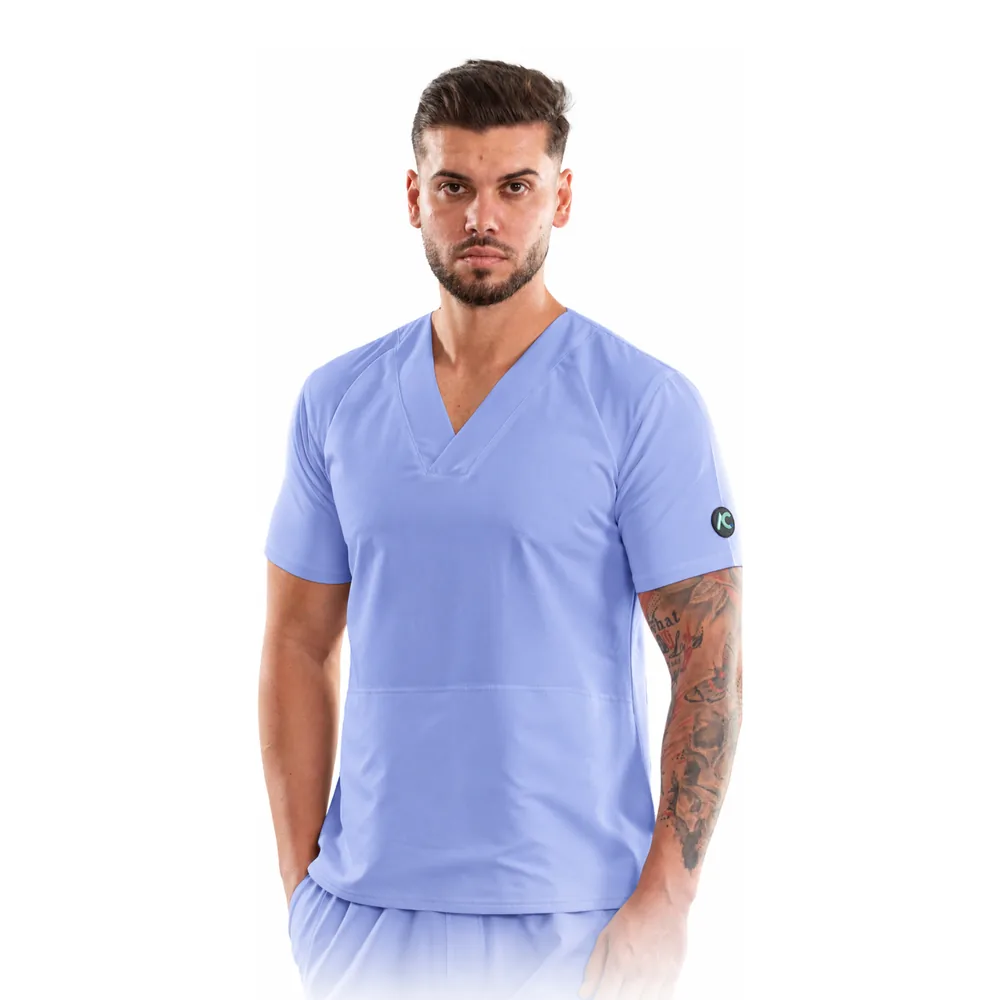
A tip from the factory floor: start with a single set, wear it for a few shifts, put it through a few washes, then build up your wardrobe in the confirmed size and colour. Your order reaches you quickly: we dispatch within 2 working days at most, and if the size still is not right, you have 14 days to exchange or return it.
Frequently asked questions
Are scrubs the same thing as medical pyjamas?
Yes, in everyday speech the two names cover the same product: the work suit made of a top and trousers. “Medical pyjamas” is the colloquial nickname, earned by the relaxed, comfortable cut; “scrubs” is the standard English term for exactly the same outfit. On the label you will usually find “medical suit” or “medical uniform”, but the garment is one and the same.
What do you wear under scrubs?
As a rule, regular underwear goes under the scrub top, and in the cold season a t-shirt or a thin long-sleeved top in a neutral colour, or one matched to the uniform. The PI fabric breathes and dries quickly, so in summer the top can comfortably be worn directly on the skin. Your workplace’s internal rules always have the final say, especially in areas with strict hygiene requirements.
Why are operating theatre uniforms green?
The most commonly cited explanation is visual comfort: green and blue-green tire the eye less than bright white under the powerful lamps of an operating theatre. On top of that, a surgeon spends hours looking at tissue in shades of red, and a colour from the opposite end of the spectrum gives the eye a restful background and softens the sensation of afterimages. Green thus became the standard of the operating theatre, while in the rest of the hospital colours remained a matter of team choice.
How do you care for a set of scrubs?
Simply, and that is one of the reasons the format conquered hospitals: machine wash at 30-40°C on a synthetics cycle, no chlorine bleach, then dry naturally on a hanger or in a dryer on low. The fabric needs no ironing; if you do iron it, use the lowest setting, inside out, with no direct steam. The uniform dries in about 30 minutes, so a single set can be washed in the evening and worn the next morning.