
Guide
How to wash and care for medical scrubs so they last hundreds of shifts
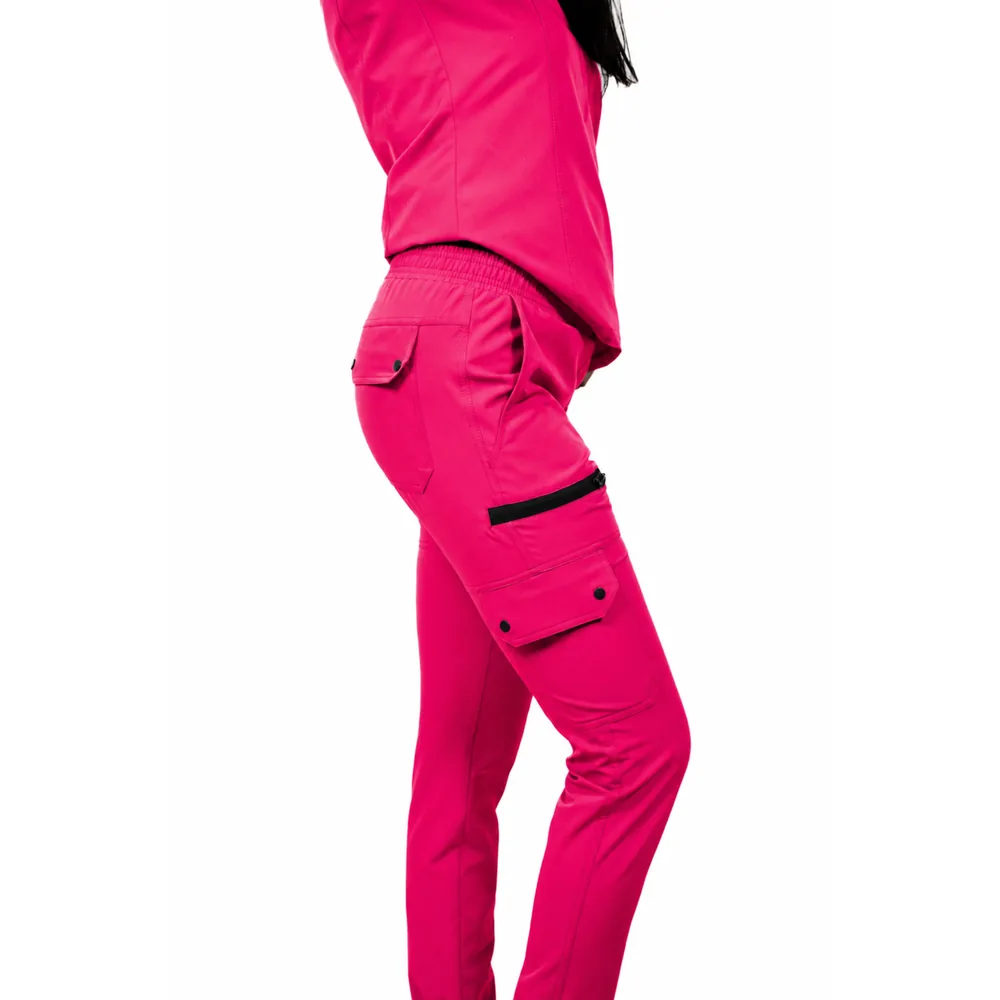
“They look great now, but what will they look like after 50 washes?” It is the question buyers ask us most often, and rightly so. A set of medical scrubs is not judged on unboxing day but after months of shifts: that is when you find out whether the stretch still recovers, whether the colour is still a colour, and whether the fabric still sits smooth on the body or has pilled. The wash is the real exam every uniform has to pass.
The good news: the result of that exam depends far less on luck and far more on four simple rules. The temperature you wash at, the cycle you choose, what you keep out of the machine, and the way you dry your scrubs together make the difference between a garment that looks impeccable after a year and one fit for the bin after a season. None of the rules takes extra effort; they only need to be known.
This guide covers washing medical scrubs from start to finish: temperature, cycle, the stains specific to medical settings, drying, ironing, and the habits that shorten a fabric’s life. The rules apply to the medical scrubs we make in our factory from PI fabric, a weave of 92% polyester and 8% elastane, tested to withstand over 100 industrial washes. And home laundering is far gentler than the industrial kind, so your scrubs start with a serious head start.
The rules in short
Caring for medical scrubs comes down to four rules: wash at 30-40°C, use a synthetics cycle, skip chlorine bleach, and air dry on a hanger. If you remember nothing else from this article, your scrubs will still live a long life:
- Temperature: 30-40°C in the machine. No higher, however dirty the scrubs may seem.
- Cycle: synthetics or sportswear. Gentle drum action and moderate spin, exactly what an elastic weave needs.
- No chlorine: chlorine bleach is off limits. It attacks elastane, the fibre that gives scrubs their 4-way stretch.
- Drying: naturally, on a hanger; PI fabric dries in about 30 minutes. A tumble dryer is allowed only on a low heat setting.
- Ironing: not needed. If you do iron, use the lowest setting, inside out, with no direct steam.
The rest of the article explains why each rule looks the way it does, and what to do in the situations no list can cover: the disinfectant stain, the scrubs that must be ready by tomorrow morning, the temptation of fabric softener.
Why 30-40°C and the synthetics cycle
Medical scrubs are washed at 30-40°C because elastane, the fibre that gives them their stretch, is sensitive to heat. PI fabric contains 8% elastane, and that seemingly small share does all the work: it lets the weave stretch in 4 directions when you bend, reach for a shelf or lift a patient, and it pulls the fabric back to its original shape afterwards. The polyester, the remaining 92%, is the fibre that holds structure, colour and form.
With repeated washing at 60-90°C, elastic fibres grow tired: they gradually lose their ability to recover, and the scrubs start bagging out at the points under strain, at the knees, the waistband, the elbows. The process is invisible from one wash to the next, which makes it all the more deceptive; it shows after a few months, when the cuff gapes and the waistband no longer holds. Washing at 30-40°C removes everyday dirt without putting that stress on the fibre.
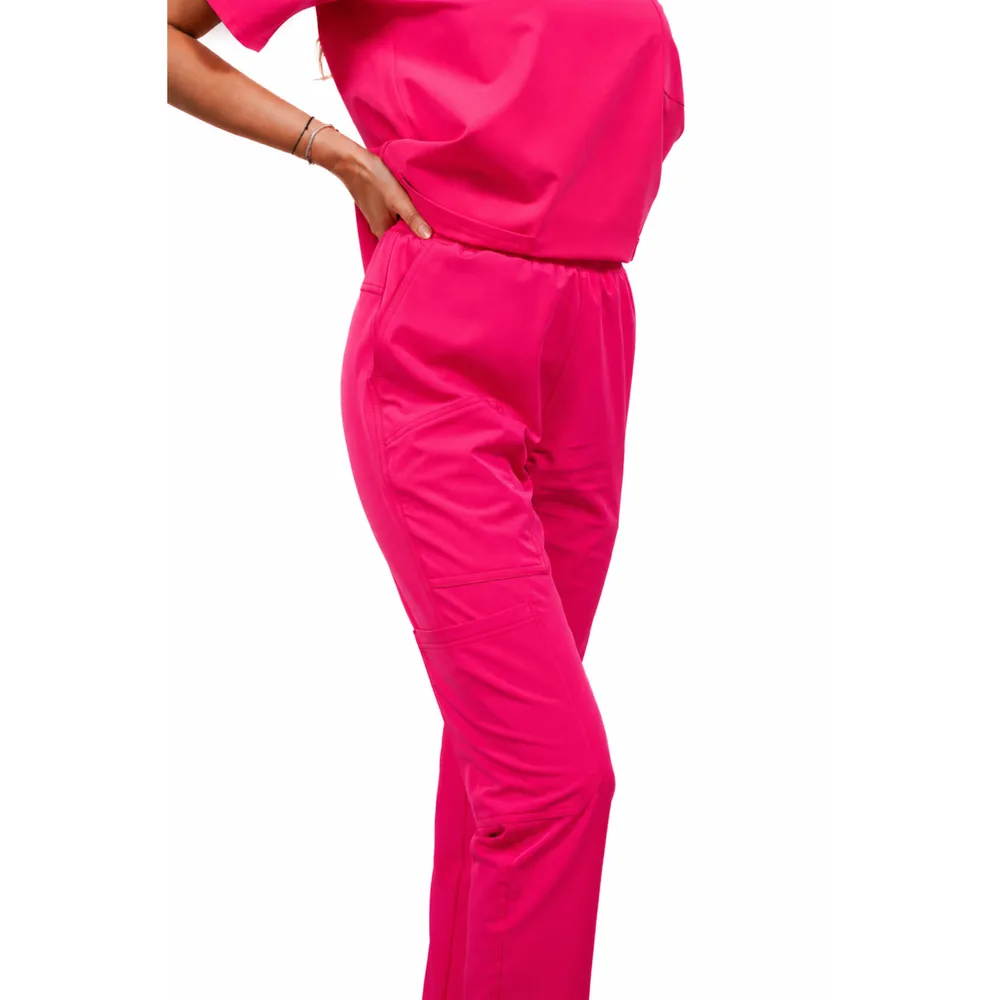
The synthetics or sportswear cycle completes the picture: it turns the drum more gently and spins moderately, exactly the treatment an elastic weave calls for. Cotton cycles, designed for fibres that tolerate intense friction, agitate the load more aggressively than polyester needs. Your usual detergent, liquid or powder, in the normal dose, is fine: the fabric asks for nothing special.
This is the place to say the thing that ties the whole article together: a good fabric does half the work. A professional weave forgives the occasional wrong wash; a cheap one degrades even under perfect care. What a professional scrubs fabric actually means, how polyester behaves compared with cotton, and why elastane matters, we cover at length in our guide to medical scrubs fabric.
Common stains in medical settings and how to treat them
Most stains from medical work come out through immediate local pre-treatment with cold water and soap, followed by a normal machine wash, not through chlorine bleach. The basic rule is speed: a stain treated the same day almost always comes out; one left for a week has already settled into the fibre.
You have an ally you may not have suspected: PI fabric is hydrophobic, meaning it repels liquids instead of soaking them up instantly. A spilled liquid sits on the surface of the weave for a few moments, long enough for you to blot it with a tissue before it soaks in. Blot, do not rub: rubbing pushes the stain deeper and spreads it.
For the usual suspects, a few general care guidelines:
- Biological marks (blood and other protein stains): rinse as soon as possible with cold water, never hot, because warm water coagulates proteins and sets the stain into the fabric. Rub gently with soap, rinse again, then machine wash as usual.
- Coloured disinfectants, iodine-based ones for example: blot immediately, rinse with cold water and pre-treat the spot with liquid detergent before washing. Do not reach for chlorine as a “final solution”: you risk trading a stain for a bleached patch and weakened elastane.
- Coffee, tea and the rest of the break-room stains: cold water and a little detergent applied straight onto the stain, left to work for a few minutes, then the usual wash.
One important note: the advice above is fabric care, not a decontamination procedure. If the facility you work in has its own protocols for textile equipment, separate washing, central collection or professional laundering, the institution’s protocols always take priority over any care guide, this one included.
Drying and ironing
Scrubs made from PI fabric air dry on a hanger in about 30 minutes and need no ironing, which changes shift logistics completely. Take the scrubs out of the machine, give them one shake, put them on a hanger and get on with your evening: by the time you finish your coffee, they are dry. The hanger also works as a passive iron, because the fabric hangs under its own weight and the small spin-cycle creases fall out on their own.
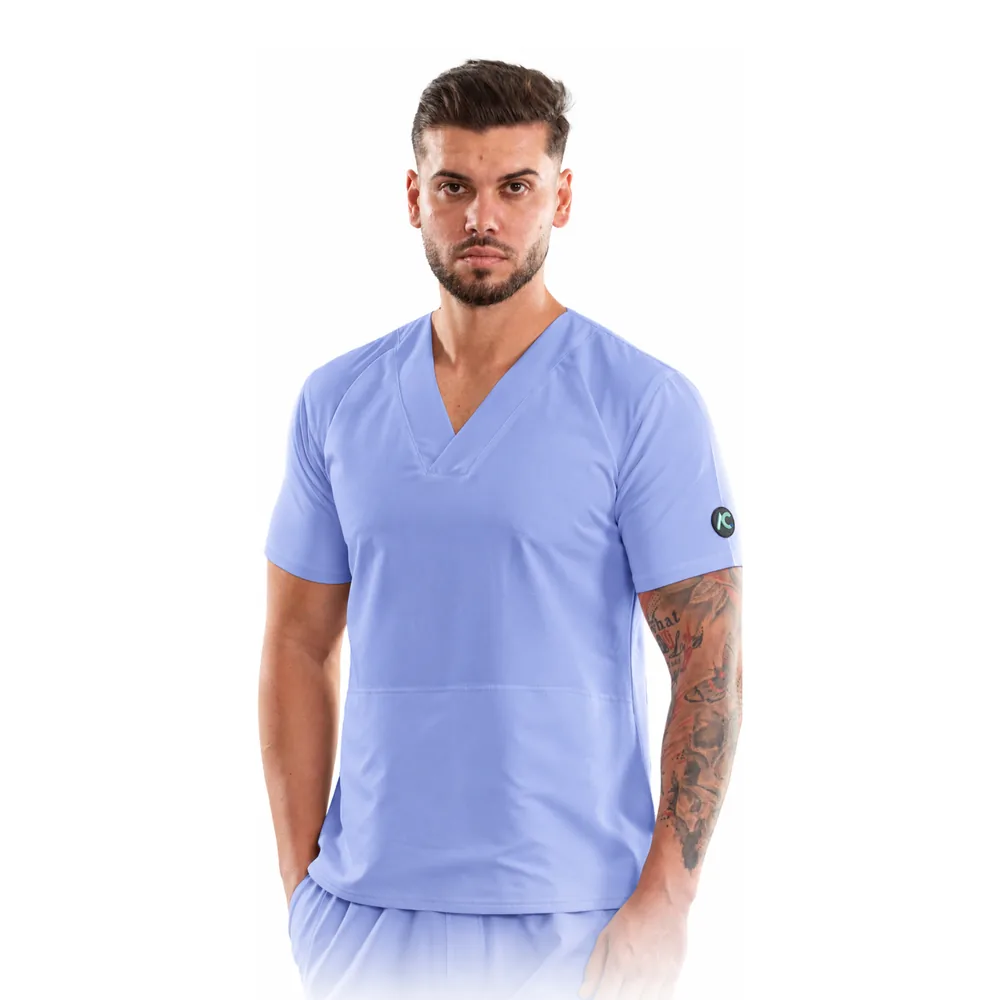
Fast drying also solves the most common scenario in practice: tomorrow’s early shift and scrubs washed at midnight tonight. With heavy cotton that would be a problem; with 30 minutes on a hanger, it is not. If you prefer the tumble dryer anyway, use it only on the low heat setting, for the same reason you wash at 30-40°C: intense heat tires the elastane.
Ironing, as we said, is not needed; polyester holds its shape by itself. If you still want a crisp finish for a particular occasion, respect three conditions: the iron on its lowest setting, the scrubs turned inside out, and no steam applied directly to the fabric. Direct hot steam is, in effect, a short bath at high temperature, exactly what we are trying to avoid.
The habits that shorten your scrubs’ life
Most scrubs do not die of old age; they die of laundry habits inherited from cotton clothes. These are the mistakes we see most often:
- Chlorine bleach “just to be sure it’s clean”. Chlorine attacks elastane and bleaches unevenly. It is mistake number one, with the hardest effects to undo: lost stretch never comes back.
- Washing at 60°C or above. It feels more hygienic, but everyday dirt comes out at 30-40°C, and the extra heat is paid for in tired elastic fibres.
- The tumble dryer on a hot setting. The same damaging heat, applied to a freshly spun garment. If you use the dryer, low heat only.
- Direct steam on the right side of the fabric. If you must iron, lowest setting and inside out; otherwise, the hanger does the job better.
- Washing scrubs in one load with clothes carrying zips, snaps and velcro. Metal edges and velcro snag the weave and pill it mechanically. Turn your scrubs inside out and wash them with similar textiles.
- Stains left “for later”. Every day a stain sits in the fibre sets it deeper. Pre-treating takes a minute and decides whether the stain comes out or stays.
How to tell your scrubs have reached the end of the road
Scrubs at the end of their life give themselves away through four signs: elastic that no longer recovers, fabric thinned or pilled in the friction zones, colour faded unevenly, and seams starting to give. If the waistband stays stretched after a wash, if the knees of the trousers “remember” the shape of your leg, or if the top has visibly thinned at the shoulders, under the stethoscope strap, your scrubs have done their duty and it is time to replace them.
The reverse is worth saying too: scrubs cared for by the rules above rarely reach these signs before going through a great many shifts. And lifespan does not depend on washing alone, but on rotation: a single set washed after every shift racks up washes far faster than three sets worn in turn. How many pieces you need so that each one gets its rest, we calculated in our guide on how many sets of scrubs you need.
When you top up your wardrobe, choose pieces from our women’s collection or our men’s collection in the same colours you already wear: pieces bought a year apart stay in the same tone if they have been cared for the same way. And if you are starting from scratch, buy the full set in one go, so all the pieces age at the same pace.
Frequently asked questions
What temperature should medical scrubs be washed at?
At 30-40°C, on a synthetics or sportswear cycle. This temperature removes everyday dirt and protects the elastane, the fibre that gives scrubs their stretch. Stains that seem to demand “boiling water” are handled through local pre-treatment with cold water and soap, not by turning up the wash temperature.
Can I use fabric softener?
It is not necessary and, as a precaution, better skipped. PI fabric stays soft without softener, and softener can leave a film on synthetic fibres that brings no benefit to a professional uniform. Your regular detergent, on its own, is all the fabric needs.
Do scrubs shrink in the wash?
No. Polyester and elastane do not shrink the way cotton does, so the size you chose at purchase stays the same after a year of correct washing. The fabric is tested to over 100 industrial washes, far harsher than any home cycle. If your scrubs do seem changed, the cause is usually excessive heat, not water.
How often should scrubs be washed?
After every shift, as a matter of basic personal hygiene; your scrubs spend a whole day in contact with the medical environment. That is exactly why the 30-minute drying time and the no-ironing fabric matter: a daily wash becomes an evening gesture, not a chore. If your institution has its own rules on washing frequency or method, those take priority.