
Guide
Medical staff workwear: what the rules in Romania say
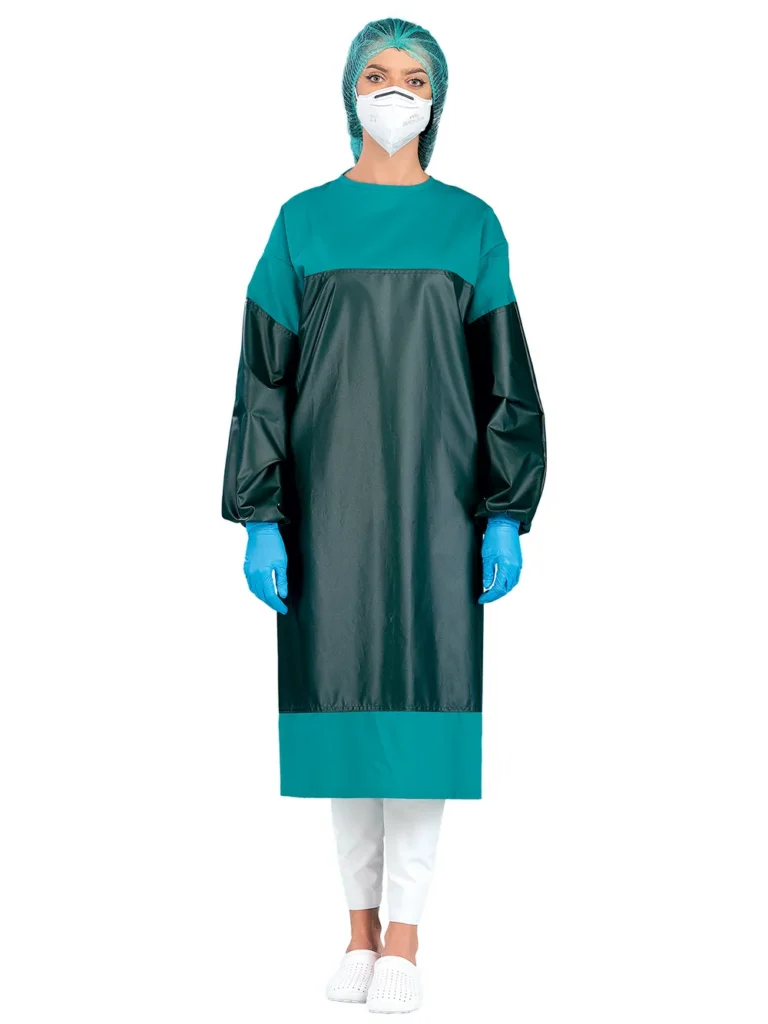
Who pays for medical staff workwear: the employer or the employee? Is a gown required by law or only by the clinic’s dress code? Can the hospital impose a colour? Sooner or later, everyone working in healthcare asks these questions, and the answers usually travel by word of mouth, from one colleague to another.
Let us put them on the table with the legal texts in front of us. Romanian law draws a clear line between two things that everyday speech mixes up: personal protective equipment (PPE), which the employer must provide free of charge, and ordinary workwear, which is a matter of each employer’s internal policy. The first category is governed by Law no. 319/2006 on occupational safety and health and by Government Decision no. 1048/2006, republished in 2022; the underlying principle comes from the Romanian Labour Code. Once you understand the distinction, most questions answer themselves.
One necessary note before anything else: this guide is for information only and is not legal advice. Your specific situation depends on the risk assessment at your workplace, on your employment contract and on the internal regulations, so use this article as a map, not as a legal opinion.
PPE or ordinary workwear: the distinction that settles everything
Personal protective equipment, PPE for short, is defined by Romanian law as any equipment worn or held by a worker to protect them against one or more risks that could endanger their safety and health at work, and ordinary work clothing does not fall under this definition. The wording appears almost identically in Law no. 319/2006, art. 5 letter j), and in Government Decision no. 1048/2006, art. 3 para. (1).
The part that settles most arguments is right there in the decision: art. 3 para. (2) expressly excludes from the definition “ordinary working clothes and uniforms not specifically designed to protect the safety and health of the worker”. In other words, the scrubs you wear every day for hygiene, identification and comfort are, in the eyes of the law, ordinary workwear, not protective equipment.
When does a garment become PPE? When it protects against an identified risk: gloves against biological agents, a sterile surgical gown in the operating theatre, a coverall when handling hazardous substances. Decision no. 1048/2006 adds one essential rule, in art. 4: PPE is to be used when risks cannot be avoided or sufficiently limited by technical means of collective protection or by the way work is organised. Who decides? The employer’s risk assessment, mandatory under Law no. 319/2006: it establishes, position by position, what protective equipment must be worn.

The distinction is not legal hair-splitting. It determines who pays, who maintains and who is responsible, which are exactly the subjects that heat up the locker room.
Who pays for what
Personal protective equipment is provided free of charge by the employer: Decision no. 1048/2006 states in art. 10 that PPE “is distributed free of charge by the employer, who ensures its good working order and a satisfactory state of hygiene through the necessary maintenance, repairs and replacements”. Law no. 319/2006 reinforces the obligation in art. 13: the employer must provide personal protective equipment, under letter r), and must issue new equipment when the old one has degraded or lost its protective qualities, under letter s).
Above all this sits a simple principle, written in two places: occupational safety and health measures may not, under any circumstances, entail costs for employees. The Romanian Labour Code says so in art. 175 para. (4), Law no. 319/2006 in art. 7 para. (6). If a piece of equipment qualifies as protective under the risk assessment, its cost cannot be taken out of your salary and you cannot be asked to buy it yourself. As a general rule, deposits or “rental fees” for PPE have no legal basis either.
With ordinary workwear, the law imposes none of this. The representative uniform, the scrubs in the clinic’s colours, is a matter of internal policy: some employers provide it in full, others reimburse part of the cost, others only set appearance rules and leave the purchase to the employee. All of these happen in practice. What you should do: check your individual employment contract, the collective agreement if there is one, and the internal regulations, and where nothing is written, ask your employer before you buy.
Equipment hygiene in healthcare facilities
For personal protective equipment, the employer is responsible for hygiene as well: the same art. 10 of Decision no. 1048/2006 requires them to keep PPE in a satisfactory state of hygiene through maintenance, repair and replacement. Hygiene and sanitary materials are also the employer’s duty, provided mandatorily and free of charge under art. 15 of Law no. 319/2006. A contaminated protective gown is not something the employee should be solving at home, in their own washing machine.
For ordinary workwear, the rules come from the facility’s internal protocols: every healthcare unit has its own infection prevention procedures, and they establish how often scrubs are changed, where they are stored and how they are washed. Follow them to the letter, even when they seem excessive; they were written for the situations you do not see. Professional common sense adds the rest: change your scrubs whenever they are visibly soiled, carry them separately from street clothes, wash them at the temperature required by the protocol and by the garment’s care label.
If you wash your scrubs at home, we wrote a separate guide on washing medical scrubs, with the right steps and the mistakes that shorten a fabric’s life. The PI fabric we cut our styles from withstands over 100 industrial washes, precisely because in a healthcare facility frequent washing is not optional.
What this means for freelancers and small practices
If you work for yourself, the roles of employee and employer overlap: you buy your own workwear and you are the one responsible for matching it to the risks in your practice. That is the situation of the dentist with their own surgery, the veterinarian, the beautician running her own salon: nobody “issues” them a uniform, but the duty of protection towards themselves, and towards their staff if they have any, remains.
The upside is freedom: you choose your own cut, colours and number of pieces, with no dress code to follow. You will find all our medical scrubs with detailed size charts and a size recommendation tool on every product page; and how many pieces you need so you are never caught short between washes is covered in our guide on how many sets of scrubs you need.
On whether workwear is tax-deductible for a sole trader or a small company, we cannot give you a one-size-fits-all answer: it depends on your legal form and on how the expense is classified. Ask your accountant before any larger purchase; a five-minute conversation saves corrections later.
How a clinic organises workwear properly
A clinic organises workwear properly by starting from the risk assessment: first establish which positions need personal protective equipment, with what characteristics and at what replacement interval, and only then define the representative outfit. The first part is a legal obligation and gets documented; the second is a management and branding decision.
For the representative outfit, standardisation pays off. A colour scheme per department, the same styles for the whole team and personalisation with the clinic’s logo, through embroidery, screen printing, thermal transfer or DTF print, turn the uniform into a business card. How to choose and roll out such a scheme is described in our guide to personalised uniforms for teams, and for volume quotes, with sizes for the whole team, there is our business orders page.
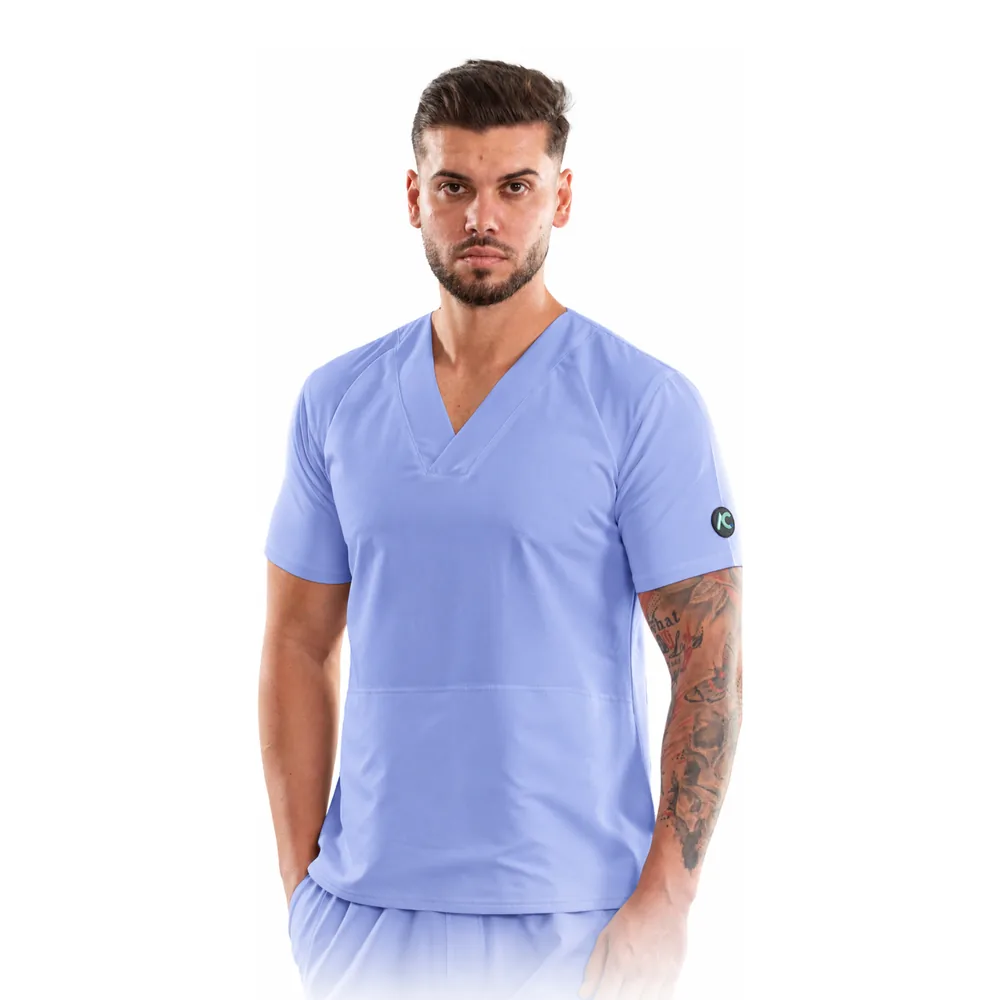
Where procedures require sterile or disposable equipment, for interventions, sample collection or biological risk situations, keep it separate from the daily outfit, in stocks sized to actual usage: you will find gowns and suits in our disposable workwear category. Written internal rules, who receives what, when it gets replaced, who reports wear, close the loop: art. 13 of Law no. 319/2006 requires the employer to issue new equipment upon degradation anyway, and simple records make the obligation easy to prove during an inspection.
Frequently asked questions
Can my employer impose the colour of my uniform?
As a general rule, yes. The representative outfit is employer policy, and internal regulations may set colours, styles and appearance rules, as long as they apply uniformly and do not discriminate. If the appearance requirements come bundled with an obligation to buy the pieces yourself, check what your contract and the internal regulations say and clarify with your employer who bears the cost.
Is a medical gown personal protective equipment?
It depends on its role, not its name. A gown worn as everyday attire, for hygiene and identification, is not PPE: it falls under the “ordinary working clothes and uniforms” expressly excluded by art. 3 para. (2) of Decision no. 1048/2006. The same object becomes protective equipment when the risk assessment lists it as a barrier against a concrete risk, for instance the sterile or reinforced surgical gown in the operating theatre. The criterion is the risk assessment, not the label on the garment.
Can I receive money instead of protective equipment?
As a general rule, no. Decision no. 1048/2006 provides in art. 10 that personal protective equipment is distributed by the employer free of charge, in kind, and a cash substitute for this obligation is not provided for in the texts we have cited. For ordinary workwear, on the other hand, the employer is free to choose: they may provide the pieces, an allowance, or nothing at all, according to internal policy.
Am I entitled to new equipment when the old one wears out?
Yes, for protective equipment. Law no. 319/2006 obliges the employer, in art. 13 letter s), to issue new personal protective equipment in case of degradation or loss of protective qualities. Report the wear in writing to your supervisor; using PPE correctly is, in turn, your own obligation under art. 23 of the same law.
One recommendation to leave with: before any decision, consult your internal regulations, your employment contract and the legislation currently in force, in its consolidated form, on the official portal legislatie.just.ro. Legal texts change, and a blog article, however carefully written, is no substitute for the official text in force on the day you read it.